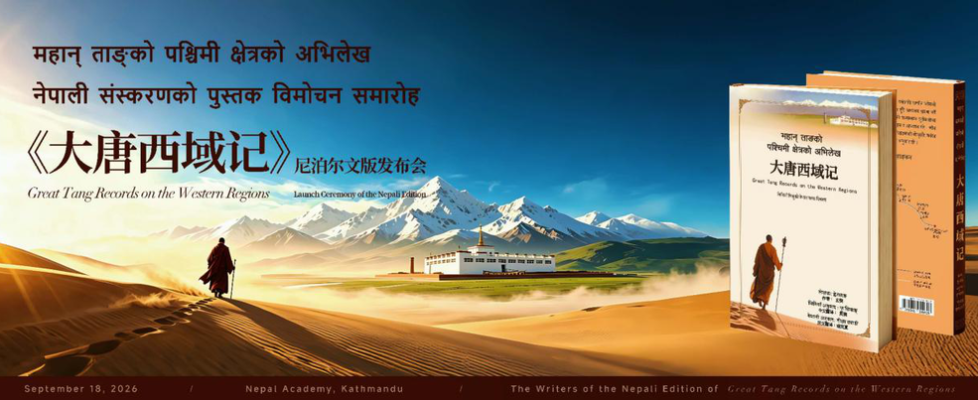
Nepali Edition of Great Tang Records on the Western Regions Launched in Kathmandu

Nepal’s National Assembly Chairperson Attends and Delivers Keynote Address
On the morning of September 18, 2026, the Nepali edition of Great Tang Records on the Western Regions, an important historical work documenting the seventh-century journey of the Chinese Buddhist monk Xuanzang and his observations across South Asia, was officially launched in Kathmandu, the capital of Nepal.
The book launch ceremony was held in the main hall of the Nepal Academy in Kathmandu.
The event was attended by Narayan Prasad Dahal, Chairperson of the National Assembly of Nepal; Raghuji Panta, former Minister for Education, Science and Technology; Kulman Ghising, former Minister for Energy, Water Resources and Irrigation; Liu Zhanping, Deputy Director of the China Cultural Center in Nepal; Bishnu Pukar Shrestha, former Ambassador of Nepal to China; Prof. Suvarnalal Bajracharya, former Vice-Chancellor of Lumbini Buddhist University; Chandra Shyam Dangol, Vice-Chancellor of the Nepal Academy of Fine Arts; K.P. Pathak, Chairperson of the Nepal International Film Festival; Apu Lal Awale, Founding Chairperson of the Nepal Chinese Tour Guide Association; Kiran Gautam, Managing Director of Current Publication Pvt. Ltd.; Gowa, head of the Nepal office of the US-based InLight Foundation; Gu Zhicao, Editor-in-Chief of Xue Mo Culture Network; and, as the final guest named in the list, Li Huabin, General Manager of AEMA-K Restaurant.
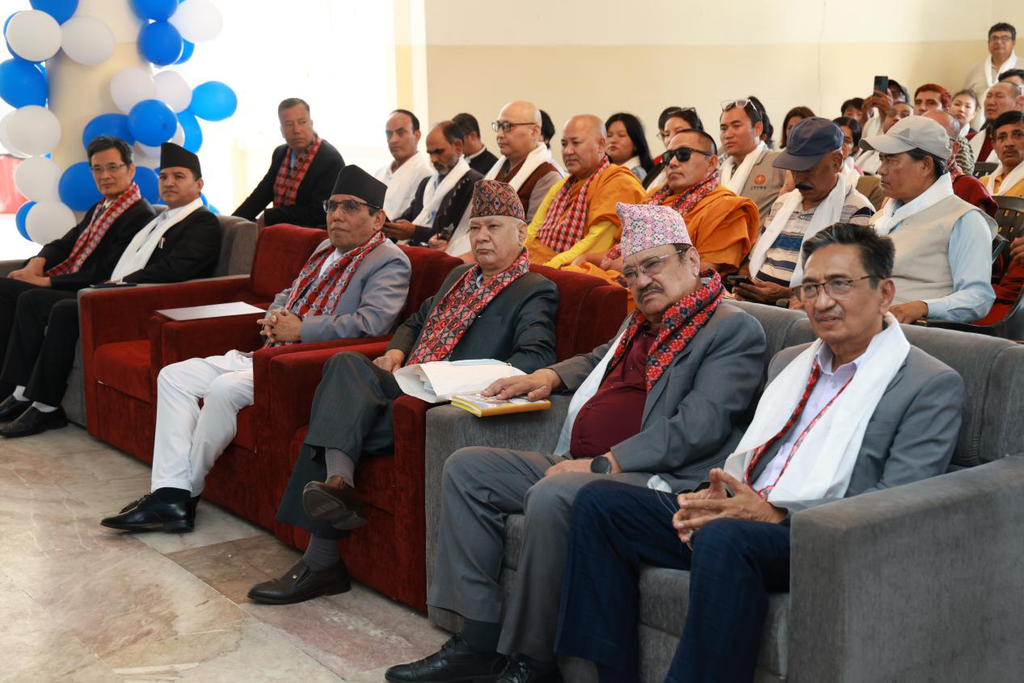
More than 100 guests from political, economic, educational, cultural and tourism circles in Nepal and China, as well as representatives of Nepali mainstream media, attended the event and witnessed the formal publication in Nepal of this approximately 1,400-year-old Chinese historical work in the Nepali language.
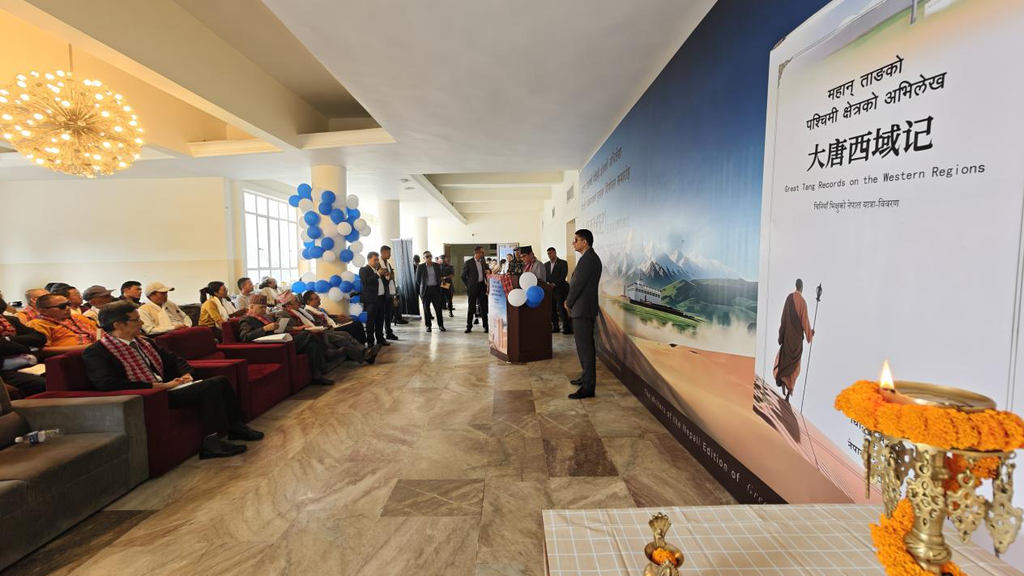
The ceremony officially began at 10:00 a.m.
Mr. Rajant, a Chinese-language teacher at the Confucius Institute at Tribhuvan University, served as the master of ceremonies and introduced the guests and the theme of the book launch.
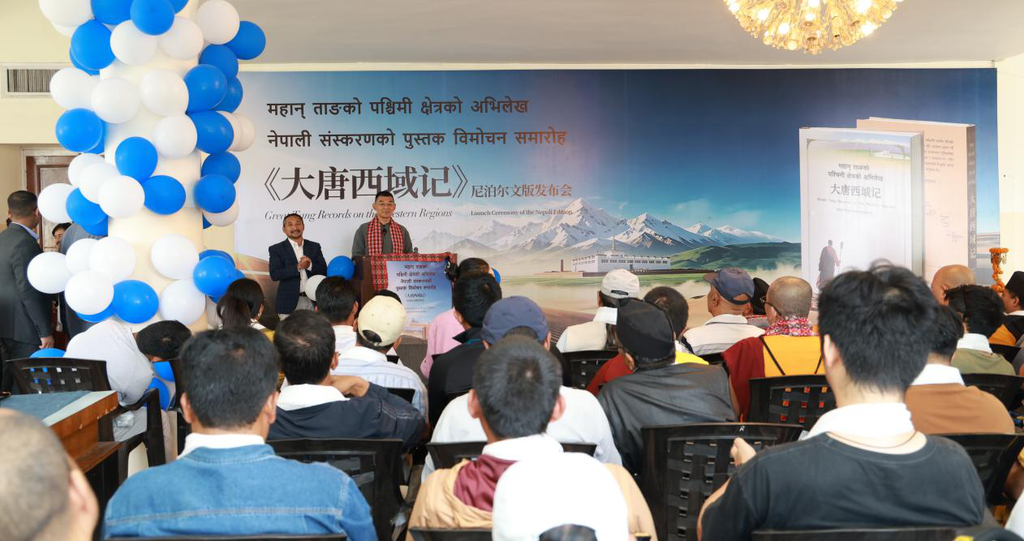
Fu Qiang, producer of the Nepali edition and Chinese-language translator, then delivered a welcome address.
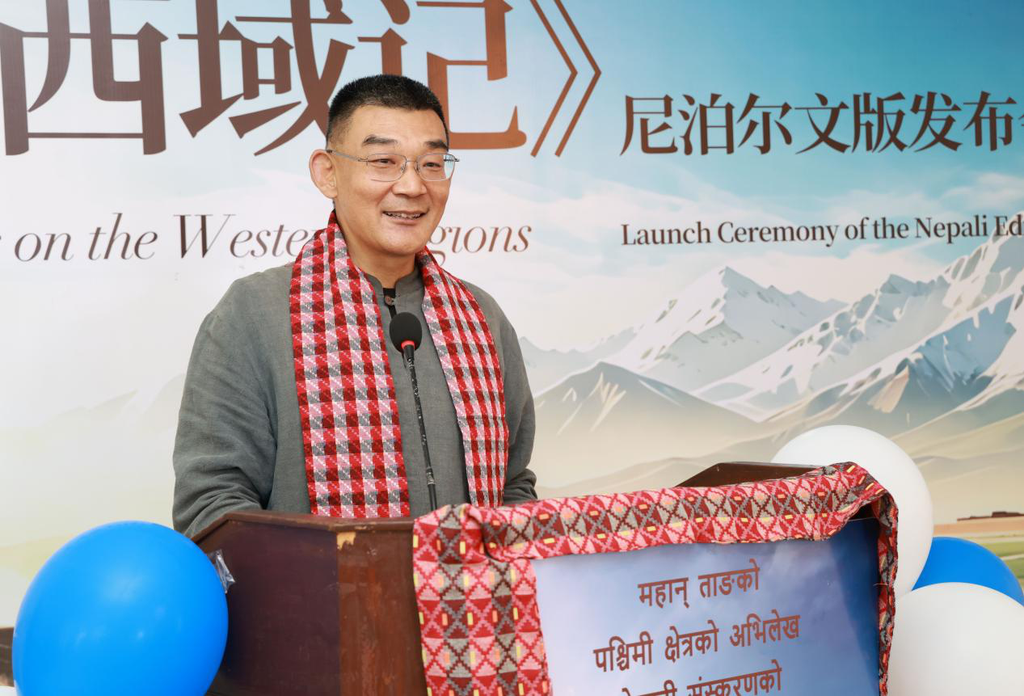
He summarised Xuanzang’s extraordinary journey with the phrase, “50,000 li across mountains and rivers, 17 years of dedication.”
Fu Qiang said that Xuanzang brought back not only Buddhist scriptures, but also an important historical record of the exchange of knowledge, culture and ideas between different civilisations.
In the seventh century, Xuanzang set out from China, travelled through Central Asia and entered South Asia, where he spent years studying and observing Nepal, India and surrounding regions. After returning to China, he organised and recorded what he had seen and experienced, producing the renowned Great Tang Records on the Western Regions.
The work contains information on the geography, cities, society, religions and cultures of many parts of South and Central Asia at the time. It is an important source for the study of Tang-era Chinese history, Buddhist history and the history of exchanges between China and other civilisations, as well as an important reference for research into the history of ancient Nepal and South Asia.
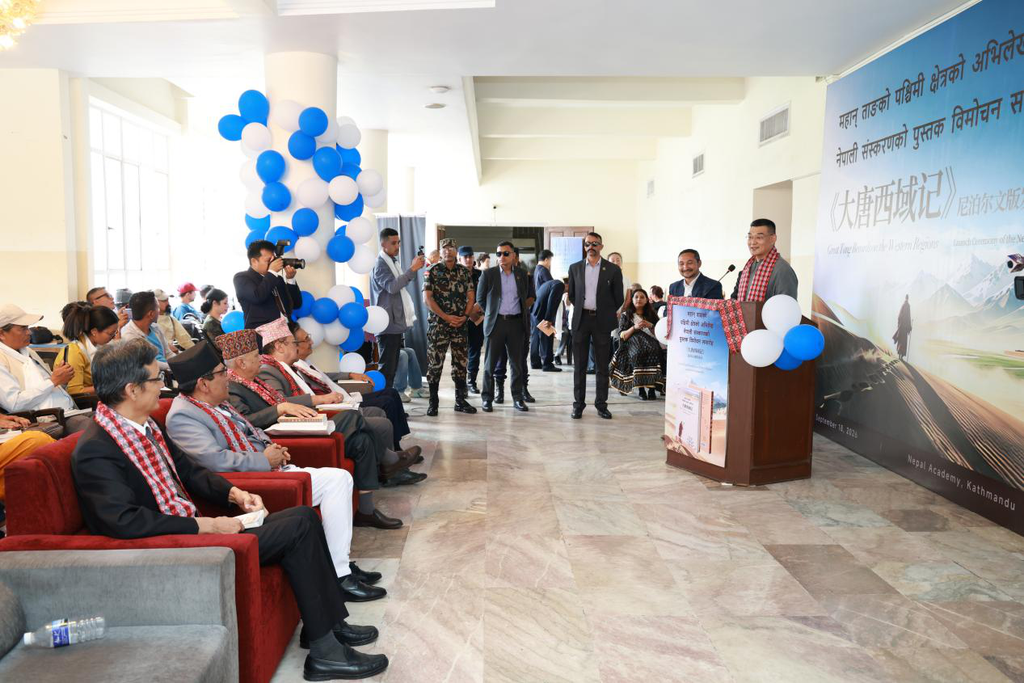
Fu Qiang particularly noted that Xuanzang visited Nepal approximately 1,400 years ago and personally saw historical sites including the Ashoka Pillar at Lumbini.
For many years, however, this important ancient Asian historical work had not had a formal Nepali edition. The publication of the present edition changes that situation.
For the first time, Great Tang Records on the Western Regions has returned to Nepal through the Nepali language. Nepali readers can now read Xuanzang’s historic account directly in their own language.
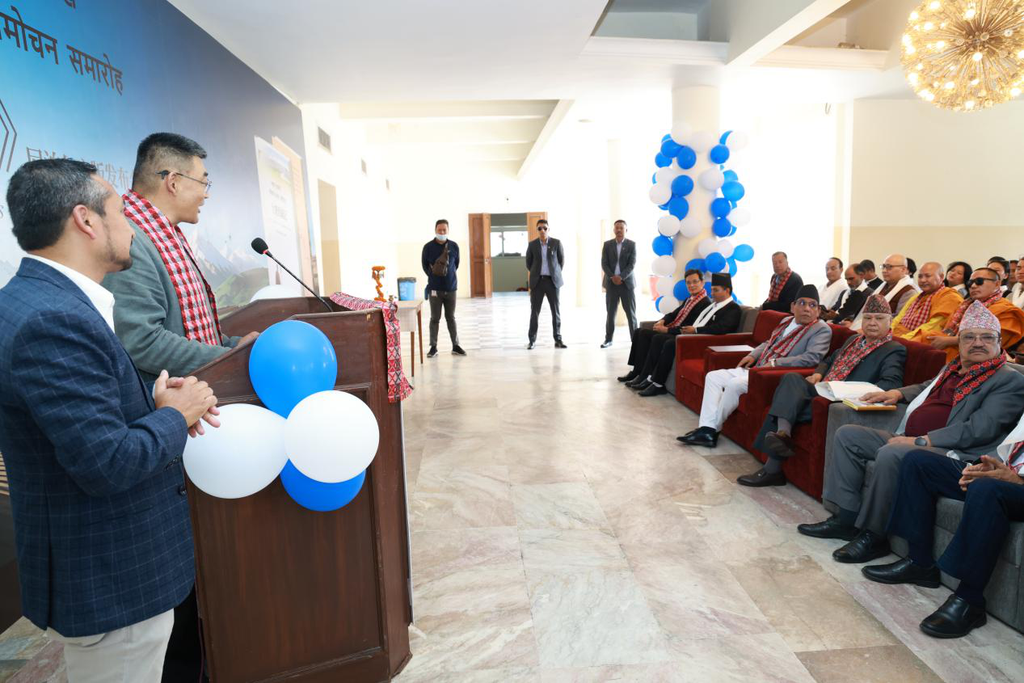
Fu Qiang said that the publication was a privately funded public-interest cultural initiative. The books will be donated to schools, libraries and other cultural and educational institutions in Nepal, with the hope that more Nepali readers will learn about, read and share the work.
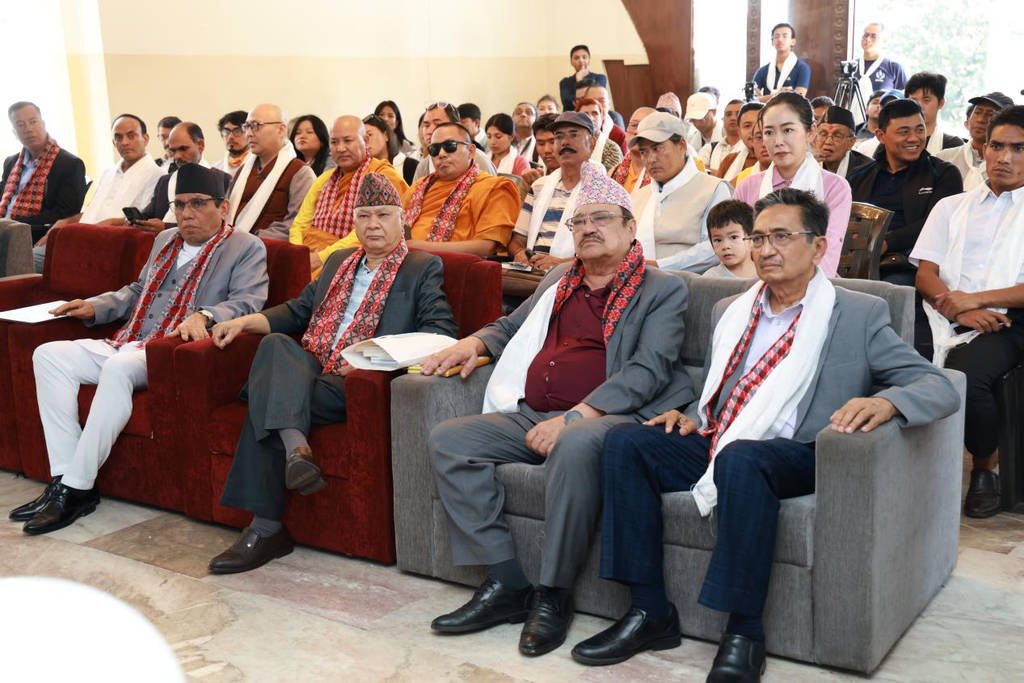
The original work was written in Classical Chinese during the Tang dynasty. Fu Qiang, the producer of the Nepali edition and Chinese-language translator, first converted and organised the original Classical Chinese text into modern Chinese. It was then translated into Nepali by Diksha Dawadi.
The Nepali text was subsequently proofread, supplemented and edited by Ganesh Kumar GC, a Nepali writer and Vice-Chairperson of Godhuli Kala Sahitya Pratishthan.
The book was published by Godhuli Kala Sahitya Pratishthan.
This process of compilation, translation and editing across centuries and languages became one of the major subjects discussed during the ceremony.
Ganesh Kumar GC then delivered a speech.
Ganesh, a Nepali writer and Vice-Chairperson of Godhuli Kala Sahitya Pratishthan, is the editor of the Nepali edition of Great Tang Records on the Western Regions.
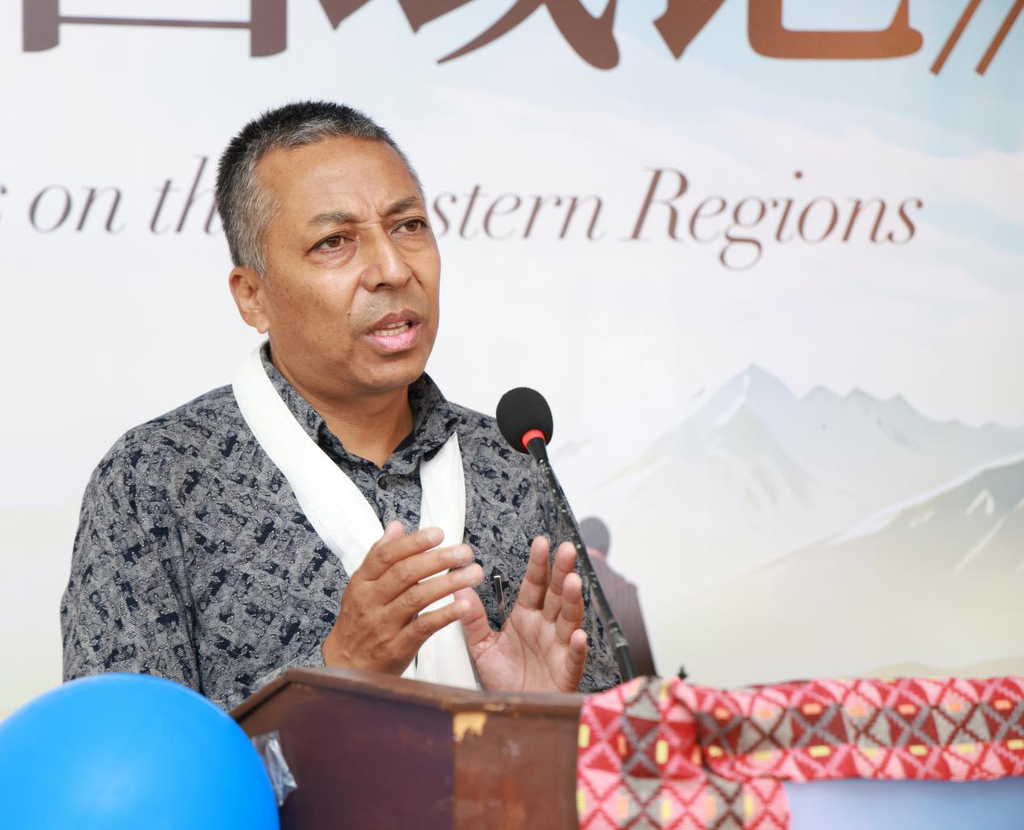
He recalled that, Around 15 years ago, while participating in archaeological work in areas including Kapilavastu, he developed a strong interest in Xuanzang.
He said that he had searched for a Nepali edition of Great Tang Records on the Western Regions at book fairs and on other occasions, but had never found one.
He also recalled that the Record of the Buddhist Kingdoms by the Chinese monk Faxian had previously been translated through several intermediary languages before reaching Nepali, a process that could inevitably lead to deviations from the original meaning.
By contrast, the Nepali edition of Great Tang Records on the Western Regions was translated directly from Chinese into Nepali, which, he said, reflected the progress of the times and the increasingly close cultural exchanges between Nepal and China.
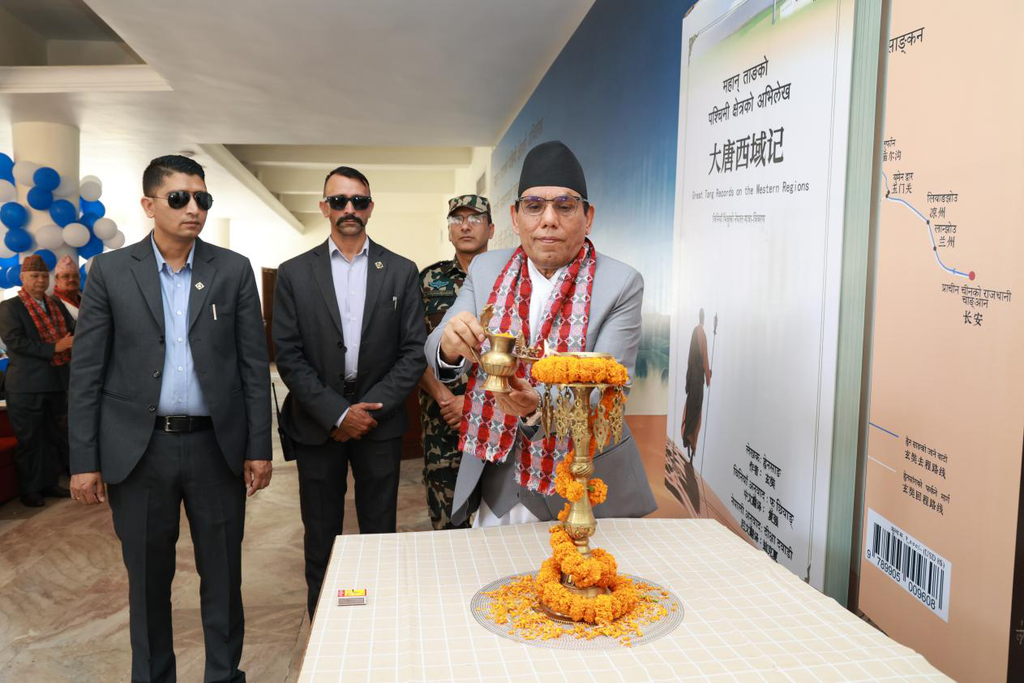
Narayan Prasad Dahal, Chairperson of the National Assembly of Nepal, then lit the traditional Nepali oil lamp, symbolising light, wisdom and auspiciousness, officially opening the book-launch ceremony.
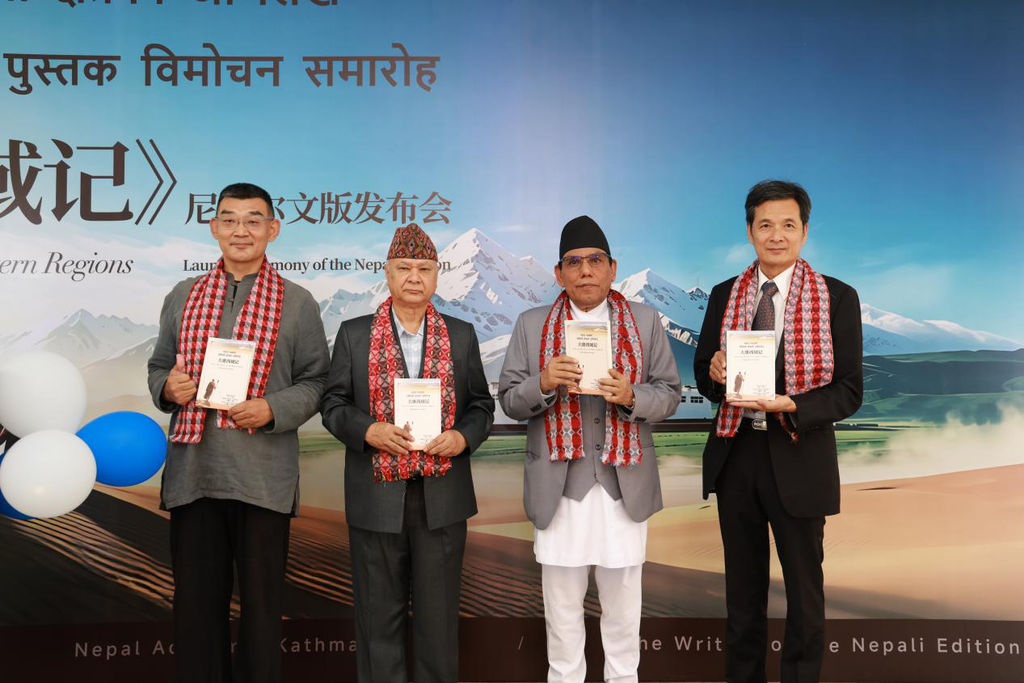
Dahal, Liu Zhanping, Raghuji Panta and Fu Qiang appeared together on stage holding copies of the newly published book.
As photographers recorded the moment, Dahal raised the book and officially declared the publication launched.
Staff members then distributed 200 copies of the newly published book to those present.
Following the launch, former Minister for Education, Science and Technology Raghuji Panta delivered remarks.
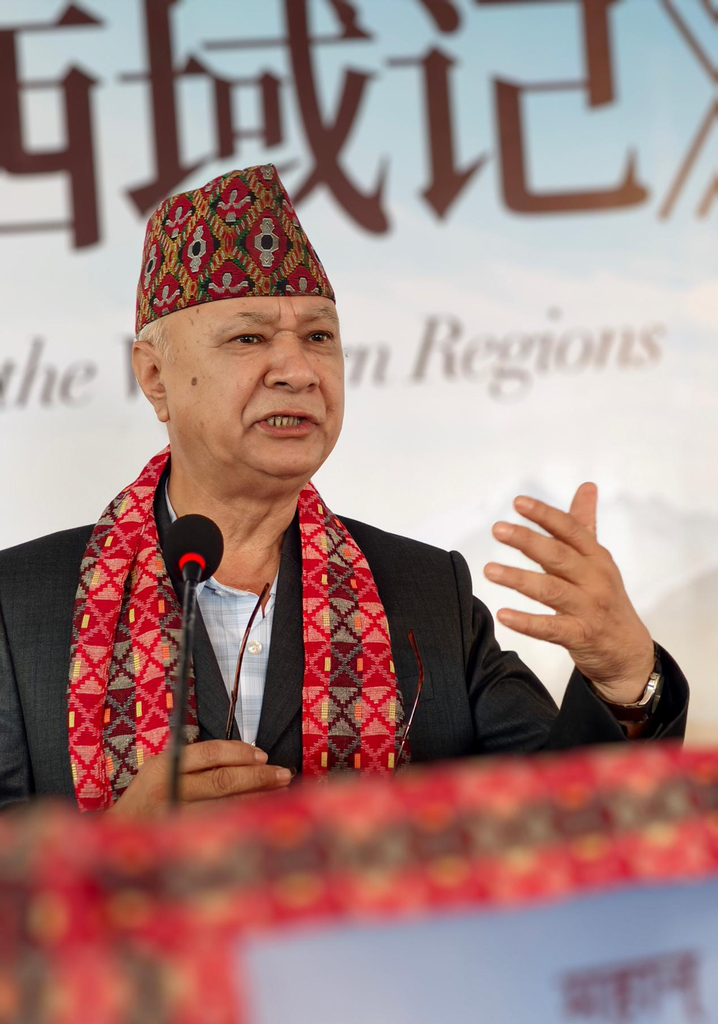
Pant noted that Xuanzang’s account contains descriptions of Lumbini, the birthplace of the Buddha, and the Ashoka Pillar, among other historical subjects.
He said these ancient records have important reference value for contemporary research into Lumbini and the history of Buddhism.
He praised the publication team for making a valuable contribution to promoting mutual understanding between Nepal and China and to making Nepali literature and ancient historical works more accessible to the public.

Former Minister for Energy, Water Resources and Irrigation Kulman Ghising arrived during the latter part of the programme and also expressed his appreciation for the publication.
Chairperson Narayan Prasad Dahal then delivered the keynote address.
Dahal first congratulated all those involved in the translation, editing and publication of the book and welcomed the formal publication of this important historical work in Nepali.

He said that the book would help Nepali readers understand Chinese history from different perspectives and contribute to a deeper understanding of the long-standing historical, cultural and people-to-people connections between Nepal and China.
Dahal noted that historical and cultural exchanges between Nepal and China date back much further than the establishment of formal diplomatic relations between the two countries in 1955.
He referred to figures including Xuanzang, Faxian, the Buddhist monk Buddhabhadra, Princess Bhrikuti and the Nepali artist Araniko as important figures associated with the historical and cultural exchanges between Nepal and China.
He said these figures and historical events demonstrated that exchanges between Nepal and China were not one-sided, but involved long-standing interaction in areas including people-to-people contact, knowledge, religion, art, culture and trade.

Dahal said that the publication of the Nepali edition of Great Tang Records on the Western Regions should not be viewed merely as the translation of an ancient book, but as an important cultural transmission through which a historical record from approximately 1,400 years ago has re-entered contemporary Nepali society through the Nepali language.
He expressed the hope that the book would be read by more Nepali people, particularly younger generations, helping them learn about Nepal’s history, Buddhist culture, the history of the Tang dynasty in China, and the long historical connections between Nepal and China.
He also spoke about the development of Nepal-China relations since the establishment of diplomatic relations in 1955, including cooperation in trade, infrastructure, energy, tourism, agriculture and people-to-people exchanges.
Dahal connected Xuanzang’s long journey across Asia with modern transportation and communication between countries, and referred to the Belt and Road Initiative as a project intended to support common development among countries of the Global South.

Following his speech, Dahal presented Fu Qiang with an honorary certificate on behalf of Godhuli Kala Sahitya Pratishthan.

The certificate stated that the historical work was an important document connecting the historical and cultural heritage of Nepal and China, and recognised Fu Qiang’s work and efforts in promoting the publication of the Nepali edition of Great Tang Records on the Western Regions.
At the conclusion of the ceremony, Fu Qiang delivered a vote of thanks on behalf of the publishing team.
He expressed his gratitude to all the distinguished guests who had taken the time to attend the ceremony, as well as to numerous individuals from Nepal and China who had supported the project.
He also thanked those who had contributed forewords, congratulatory messages and recommendations for the book, including the President of the All Nepal Bhikkhu Association, Dharma Shobhana Mahasthavir; Master Jiumei, Chairperson of the InLight Foundation; and Dr. Kalyan Raj Sharma, who was recommended by the Government of Nepal on September 18, 2026, as Nepal’s ambassador to China.
They had expressed their support for the publication through written contributions and messages.

In his closing remarks, Fu Qiang quoted a Chinese poem to express his gratitude to the guests and also referred to a Nepali saying conveying the meaning: “One may give up a meal, but one should never give up friendship.”
He said that what everyone had offered that day was more than support—it was friendship.
He expressed his sincere hope that the people of Nepal and China would continue to build a deeper, longer-lasting and broader friendship.

After the ceremony, the Nepali translator of the book, Ms. Diksha Dawadi, was interviewed by journalists.After introducing the process of translating and producing the book, she said:“Although the launch ceremony lasted only one morning, it crossed time and space and connected two countries and 1,400 years of history.”

From September 18 to 20, dozens of Nepali media outlets published reports on the launch, including The Rising Nepal, Gorkhapatra, Ratopati, Nepal on the Web, Khabarhub, Lagani News, Ray TV, MTV Nepal, South Asia Network TV, Jana Aastha News, JAY TV, Nepal Diplomat, Maitri News, ICT Frame, Hamro Patro, News Karobar, Rojgar Manch and eKarmachari, among others.

Reports described the publication as an important development in Nepal-China cultural exchange.Among the comments appearing in the reports were that “the book will leave a lasting mark on the history of cultural exchange between Nepal and China”; that “without Xuanzang’s courageous journey, some important chapters of South Asian history might have remained obscured”; and that “the publication of the Nepali edition of the book marks a new achievement in the historical and cultural relationship between Nepal and China.”
From Xuanzang’s journey westward to the publication of the Nepali edition of Great Tang Records on the Western Regions in Kathmandu today, nearly 1,400 years have passed.Time has changed the language, but it has not broken the links between civilisations.

Today, this historical work from Tang-era China has entered Nepali society once again through the Nepali language, opening a new window for Nepali readers to explore ancient Asia and understand the long history of cultural exchange between Nepal and China.


